
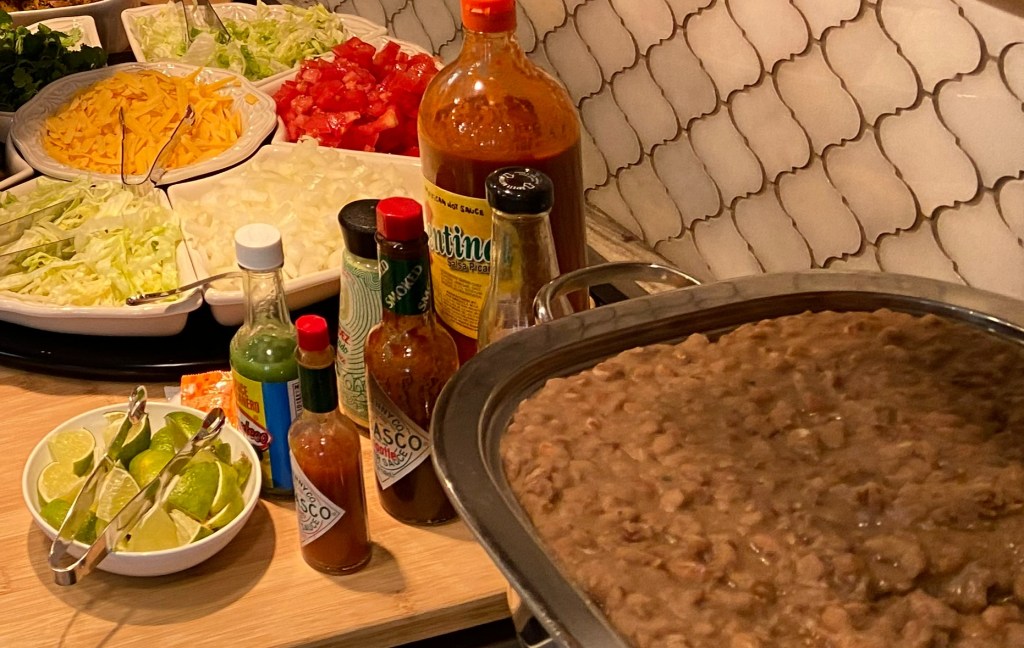
The last time I made beans was for my Daughter-in-law’s birthday. They were a big hit, and several people asked me what my secret is. I decided I would create a recipe sheet and post it on my “Rechelle’s Recipes for Family Gathering” page. Here is the link to the page: Rechelle’s Recipes for Family Gathering
As I was sorting the dry pinto beans last Saturday before the party, Ray and I had this whole conversation about his early childhood memories of helping his Grandma sort beans. It seems the process has gotten a lot more efficient because we hardly ever encounter the kind of rocks and dirt he used to find in those days. We became curious about how the beans grow and ended up watching a couple of YouTube videos that show how the beans grow and are harvested. It was pretty fascinating to us! I’ve posted the links to those videos at the bottom of this blog post in case you’re interested.
Anyway, back to Saturday. You might be wondering how I could wait until the day of the party to make the beans from scratch, but I always use the “quick soak” method, and work on the veggies while the beans are soaking. But first, let’s talk about sorting. Anything that looks like it could have black mold on it has to go in the trash for sure. You also want to discard any beans that aren’t smooth or if they have a weird shape. Split beans are ok as long as they aren’t discolored or mottled. Once the beans are sorted and thoroughly rinsed, pour them in a large stock pot with enough water over them to expand to double their original size. Don’t add any seasonings at this point – just water and dry beans for the quick soak. Now it’s time to bring them to the boil and let them continue a rolling boil for 2 minutes. When your timer sounds, simply turn the stove off and leave the beans with the lid on for 1 hour. Then the water needs to be completely strained and the beans need a really good rinse before starting the cooking process. At this point, you want a couple of inches of clean water above the top of the soaked beans. If the water still looks cloudy or dark at all, I strain them one more time and rinse them in the strainer before returning to the stock pot.
The recipe I created for my website is for 4 cups of dry beans, but last Saturday I made 8 cups (4 pound bag) for a party of about 30 people. Since I was expecting a couple of vegetarian guests, I smoked the chilies and a red bell pepper for about 4 hours instead of using beefy onion soup mix. I figured the smoke flavor would compensate for the meat flavoring and then I just used plain onion soup mix instead. I use a Stainless Steel 3 Inch Twist-Lock Spice Ball (about $8 on Amazon) to put my fresh onion sections, garlic, cilantro, and oregano in it instead of having to chop and press all of those ingredients. I always lay my chilies on top of the beans after rinsing and trimming the stems to about 1/2 inch so that I don’t have to deal with the chili oils on my skin and the seeds stay intact inside the chilies.
The methods I’m sharing with you have enabled me to create great tasting beans for my family and friends with very little mess or effort! Once they simmer for 3 – 4 hours, the juice thickens to a really nice consistency, and the vegetables have thoroughly flavored the beans. Simply remove the chilies from the top, and set the mesh ball in the sink to drain and cool. I normally discard the vegetables at this point, but sometimes I’ll remove the seeds and chop the poblano for tacos or to add to my carnitas.
Here are the links of the two pinto bean videos we watched: Pinto Bean Harvest in the Red River Valley, and Pinto Bean Harvest with Jenny

 rechelle's lifelyrics
Leave a comment